
Description
AI Prompt Pro – Your Ready-to-Use AI Productivity Library
Stop staring at a blank AI chat box wondering what to type.
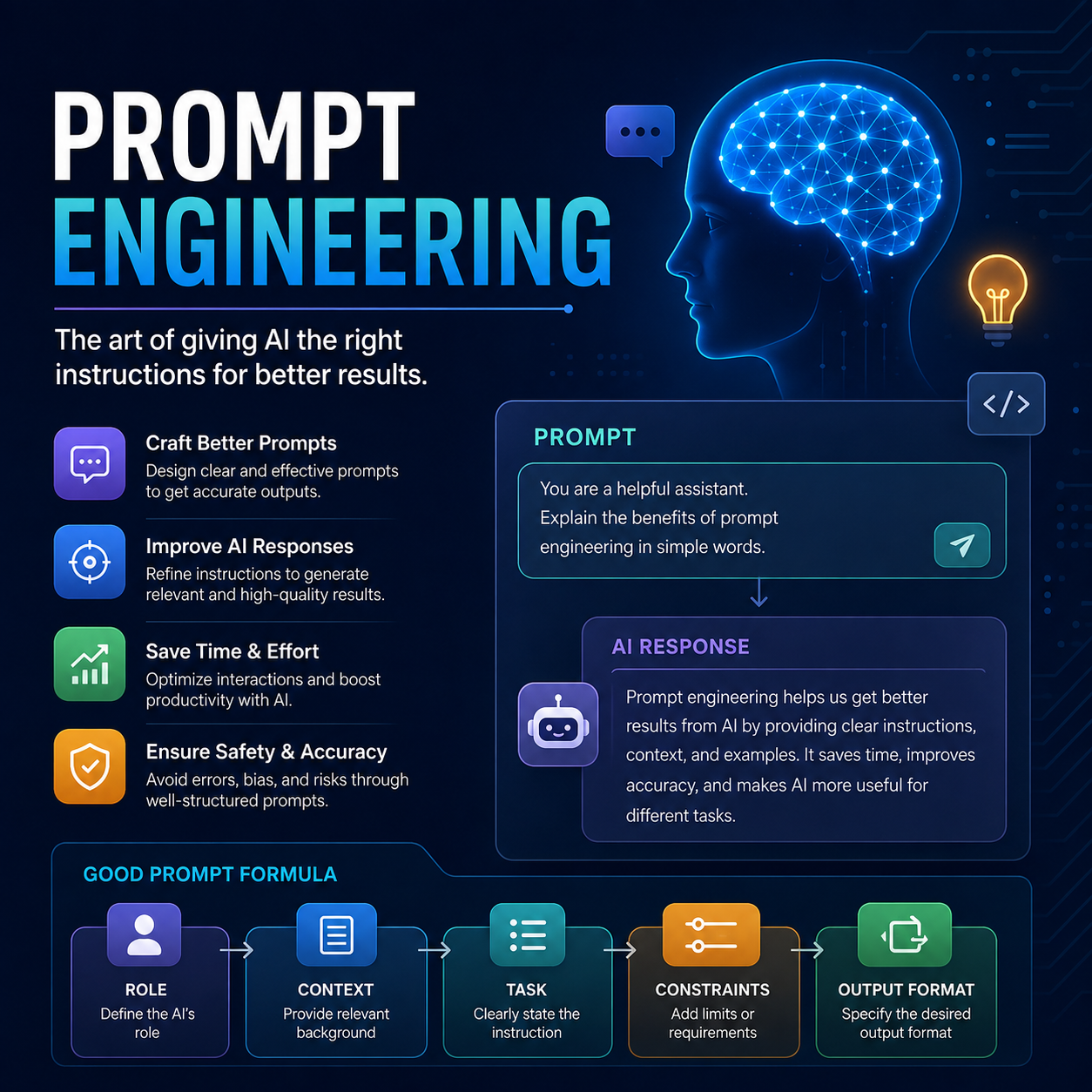
AI Prompt Pro gives you a curated collection of professionally structured prompts designed to help business owners, marketers, founders, freelancers, and creators get more useful results from AI.
From creating social media content and writing marketing copy to researching competitors, improving SEO and generating business ideas — simply choose a prompt, customize the highlighted information and use it with your preferred AI tool.
What You Can Do With It
Images Prompts
- Sunlit meadow
A vast sunlit meadow of wildflowers, gentle rolling hills fading into distance, a single wooden fence in the mid-ground, tall cumulus clouds with defined edges, warm late-morning light, gouache background painting, in the style of Studio Ghibli backgrounds
- Farmhouse at golden hour
A modest farmhouse with a red-tiled roof at the edge of a green pasture, laundry hanging on a line, a bicycle leaning against the wall, distant mountains in soft haze, golden-hour side light, hand-painted watercolor, Studio Ghibli background style
- Overgrown train tracks
Abandoned train tracks running through tall summer grass, wildflowers pushing through the sleepers, a rusted signal in the distance, warm afternoon light, gouache painting, Studio Ghibli countryside aesthetic
- Wheat field with pathway
Endless golden wheat field, a narrow dirt path curving through it, one wooden scarecrow in the mid-distance, huge cumulus clouds in a blue sky, low afternoon sun, muted warm palette, hand-painted background art in the Ghibli tradition
- Riverside village
A small stone-and-wood village along a clear river, water reflecting sky, a wooden pier with a moored rowboat, cedar trees on the far bank, misty early morning light, soft focus, gouache, Studio Ghibli style
- Mountain pass road
A winding mountain road cutting through pine forest, one telephone pole visible, distant valley in blue-green haze, patches of wildflowers on the shoulder, late spring afternoon, warm sunlight through the trees, hand-painted background
- Fishing village at dawn
A small fishing village clinging to a cove, boats drawn up on the pebble beach, low mist over the water, wooden houses with weathered blue paint, seagulls in the distance, cool pre-dawn light with warm windows glowing, gouache painting, Ghibli style
- Terraced rice fields
Terraced rice fields on a hillside, water in the paddies reflecting sky, a single farmer in a conical straw hat, wooden shrine at the top of the hill, late afternoon light, muted greens with warm gold highlights, hand-painted watercolor background
- Country roadside with vending machine
A rural roadside at dusk, a single glowing vending machine, cicadas implied by density of green, dense summer foliage, mountains in the far distance, warm yellow window light from a house up the road, soft moody light, painted gouache background, Ghibli aesthetic
- Overgrown shrine steps
Ancient stone steps climbing up through dense forest to a small Shinto shrine, moss on every surface, a red torii gate half-hidden by leaves, dappled sunlight through cedar branches, gouache painting, in the style of Studio Ghibli backgrounds
Urban & town scenes (10 s)
- Small-town street at dusk
A narrow street in a small Japanese town, warm yellow light from paper lanterns and shop windows, telephone wires crossing the sky, a black cat sitting on a stone wall, evening blue-purple sky, gouache background painting, Studio Ghibli style
- Bathhouse alley
A steep alley climbing between traditional wooden bathhouses, steam rising from a chimney, glowing lanterns hanging from eaves, wet cobblestones reflecting light, evening fog, gouache painting, Ghibli style backgrounds
- Bakery window
A tiny bakery window at street level, fresh bread and pastries visible through the glass, a bicycle parked outside, checkered curtains inside, morning light, close-crop composition, watercolor background painting, in the Ghibli tradition
- Rooftop garden
A small rooftop garden on a wooden building in a dense city, potted plants and hanging laundry, a wooden ladder, distant city skyline in soft haze, late afternoon sun, warm golden light on the plants, hand-painted background, Ghibli aesthetic
- Old bookshop interior view from street
Looking through the window of an old bookshop, warm yellow interior light, stacks of books to the ceiling, a single reading chair by a lamp, evening blue outside, reflection of streetlamps in the glass, gouache painting, Studio Ghibli style
- Rainy market street
A narrow market street after a summer rain, wet pavement reflecting neon and lantern light, umbrellas moving in the crowd, awnings dripping, warm shop windows, evening blue sky above, painted watercolor background, Ghibli aesthetic
- Café terrace
A tiny café with two outdoor tables under a striped awning, a chalkboard menu, potted flowers on the sidewalk, cobblestone street, mid-morning sun casting long shadows, warm palette, gouache painting, in the style of Studio Ghibli backgrounds
- Train station platform
A small rural train station platform at sunset, one wooden bench, a single vending machine glowing, a wall clock, the tracks extending into a wheat field, cicadas implied by density of green foliage, warm golden light, painted gouache, Ghibli style
- Rooftop laundry lines
View across a dense neighborhood of low buildings, laundry hanging on rooftop lines, a red rooster on one of the roofs, chimneys in the distance, wide blue sky with defined cumulus clouds, morning light, hand-painted background, Studio Ghibli aesthetic
- Neighborhood back street
A quiet residential back street between wooden houses, a stone wall on one side, potted plants and hanging laundry, a black cat crossing the road, mid-afternoon light, everyday and lived-in atmosphere, gouache painting, in the Ghibli tradition
Fantasy & magical scenes (10 s)
- Floating island village
A small village on a floating island in a golden-cloud sea, wooden bridges connecting rocky outcrops, cascading waterfalls falling into the void, birds in flight, warm sunset light, painted watercolor, in the style of Studio Ghibli backgrounds
- Forest with spirits implied
A deep old-growth forest with massive twisted trees, thick moss on everything, shafts of green-tinted sunlight, small glowing motes in the air, one stone lantern half-buried in ferns, mystical mood, gouache painting, Ghibli style
- Sky castle
A stone castle perched on the summit of a mountain wreathed in clouds, distant peaks visible in blue haze, birds circling below, warm morning light on the castle walls, cool shadow in the valley, hand-painted background, Studio Ghibli aesthetic
- Underwater city glimpsed from surface
Clear turquoise water with the outline of a submerged city visible below, sunbeams cutting through the water, small fish in shafts of light, one broken column emerging from the surface, warm afternoon sky above, gouache watercolor painting, in the Ghibli tradition
- Witch’s cottage in the forest
A crooked wooden cottage in a clearing, herb garden overgrowing the path, chimney smoke drifting up, hanging bundles of dried herbs on the eaves, a black cat on the windowsill, dappled forest light, gouache painting, Studio Ghibli style
- Dragon’s mountain lair
A dragon’s cavern high in a mountain range, treasure glinting in the shadows, one large stained-glass window letting in colored light, view of a valley through the cave mouth, cool blue shadow contrasted with warm golden light beam, hand-painted background, Ghibli aesthetic
- Enchanted lake
A perfectly still lake reflecting a pink-orange sky, mist rising from the surface, one small wooden boat in the middle of the water, distant mountains in silhouette, spirits implied by faint glowing motes in the mist, painted gouache, in the Studio Ghibli tradition
- Cloud sea from above
Aerial view above an endless sea of clouds, the peaks of distant mountains poking through like islands, warm golden sunrise light, one small airship in the distance, painted background art, in the style of Studio Ghibli films
- Ancient library
A vast old library with wooden ladders reaching to a domed ceiling, dust motes suspended in shafts of light from tall windows, one reading desk with an oil lamp, warm brown palette, gouache painting, Studio Ghibli aesthetic
- Tree spirit meadow
A meadow at twilight with a massive gnarled tree at the center, small glowing spirits gathered at its roots, fireflies in the air, cool blue-purple sky above, warm firefly light below, painted watercolor background, in the Ghibli tradition
Interior & cozy scenes (10 s)
- Traditional kitchen
A traditional Japanese-style kitchen with wooden counters, a copper kettle on a stove, hanging pots and utensils, morning light through a paper window, one small cat sitting on the mat, warm palette, gouache painting, Studio Ghibli style
- Attic bedroom
A small attic bedroom under a sloped wooden ceiling, a single bed with quilted blanket, one round window looking out at trees, books stacked on the floor, warm afternoon light, cozy palette, hand-painted background, Ghibli aesthetic
- Writer’s study
A cluttered study with a wooden desk covered in papers and one typewriter, a leather chair, tall bookshelves, one green banker’s lamp, evening warm light, cool blue outside the window, gouache painting, in the Studio Ghibli tradition
- Warm café interior
A small café interior at evening, wooden tables and warm yellow bulb lighting, one steaming cup of coffee on the counter, chalkboard menu on the wall, a customer reading by the window, rain visible outside, gouache painting, Ghibli style
- Music room
A cozy music room with an upright piano, one violin on a stand, sheet music scattered on a chair, warm afternoon light through a lace curtain, potted plants on the windowsill, painted watercolor background, Studio Ghibli aesthetic
- Children’s bedroom
A children’s bedroom with a bunk bed, hand-drawn artwork on the walls, wooden toys on the floor, a rag doll on the pillow, one small nightlight glowing, evening blue outside, warm interior light, gouache painting, in the Ghibli tradition
- Old workshop
A carpenter’s workshop with a wooden bench covered in tools, wood shavings on the floor, one half-finished chair in the middle, dust motes suspended in a beam of light from a small window, warm brown palette, painted background, Studio Ghibli style
- Bathhouse interior
The interior of a traditional Japanese bathhouse, steam rising from wooden tubs, warm yellow light from paper lanterns, blue-tiled walls, one wooden bucket and a folded towel, cozy atmosphere, gouache painting, Ghibli aesthetic
- Tea room
A traditional tea room with tatami floor and low wooden table, one iron teapot and two cups, a scroll painting on the wall, morning light through paper screens, calm palette, painted watercolor background, Studio Ghibli tradition
- Grandmother’s kitchen
A grandmother’s kitchen with checkered curtains, a cast-iron pot simmering on the stove, hanging garlic and herbs, a wooden chair with a knitted cushion, afternoon sunlight, warm palette, gouache painting, in the style of Studio Ghibli backgrounds
Weather & atmospheric scenes (10 s)
- Summer storm approaching
Wide countryside vista with a dark storm front rolling in from the left, one small farmhouse in the foreground, tall grass bent by wind, warm golden light on the foreground still, cool dark cloud sea behind, dramatic contrast, hand-painted background, Studio Ghibli style
- First snow
A small village with the first snow of winter falling, soft grey sky, warm yellow window lights, one child in a red coat looking up, low late-afternoon light, muted palette with warm accents, gouache painting, Ghibli aesthetic
- Foggy morning
A pine forest in dense fog, only the nearest trees visible in silhouette, moisture on every needle, a narrow dirt path receding into whiteness, one small red mushroom in the foreground, cool grey palette, painted watercolor background, Studio Ghibli style
- Golden hour with long shadows
A grassy hillside at golden hour, one solitary tree with an extremely long shadow, warm orange light saturating everything, distant hills in cool blue haze, no other elements, minimal composition, gouache painting, in the Ghibli tradition
- Rain on a window
Close view of a window with rain streaming down, blurry warm lights in the background, one plant on the sill in focus, cool blue palette outside, warm interior implied by the light behind the plant, gouache painting, Studio Ghibli style
- Starry night sky over a village
A small mountain village at night, dark blue sky with a wash of stars and the Milky Way overhead, warm yellow windows in the houses below, one paper lantern glowing near the foreground, calm still atmosphere, painted watercolor background, Ghibli aesthetic
- Windy autumn day
A hillside covered in autumn trees, red and gold leaves swirling in the wind, one wooden shrine at the top of the hill, cool blue sky with wispy clouds, dynamic sense of movement, warm palette with cool contrast, gouache painting, Studio Ghibli tradition
- Summer heat haze
A country road on a hot summer afternoon, heat haze shimmering above the pavement, cicadas implied by the density of the surrounding green foliage, one abandoned bicycle, empty vending machine glowing in the distance, muted greens with warm highlights, hand-painted background, Ghibli style
- Moonlit sea
A calm ocean at night under a huge full moon, moonlight path across the water, one small fishing boat in the distance, cliff in the foreground with a single wooden bench, cool blue palette with silver highlights, painted watercolor, in the Studio Ghibli tradition
- Rainbow after rain
A wide green valley after a summer storm, one clear rainbow arching across the sky, wet grass sparkling in returning sunlight, warm-cool contrast between the still-dark clouds and the bright foreground, gouache painting, Studio Ghibli aesthetic
Business Prompts
1. Pre-meeting briefing
You are my chief of staff preparing me for a meeting. Read the context below and produce:
1. A 3-bullet TL;DR of what this meeting is about
2. The 2 decisions I need to make (with the tradeoff for each)
3. 3 questions I should ask that the other side probably hasn’t thought about
4. 1 risk I should flag if it comes up
Context: – Meeting title: [TITLE] – Attendees and roles: [NAMES + ROLES] – Related docs/threads: [PASTE OR LINK] – What outcome I want: [ONE SENTENCE]
2. Structured meeting notes from transcript
Convert this meeting transcript into structured notes with these sections:
– Decisions made (bullet list, with the person who owned each)
– Action items (owner | due date | what)
– Open questions (things raised but not resolved)
– Interesting side threads worth revisiting
Skip small talk, apologies, and repeated points. If someone contradicted themselves, note both positions.
Transcript: [PASTE]
3. Action items only
Extract every action item from this transcript as a Markdown checklist. Format:
– [ ] @owner — action — due [DATE if mentioned, else “TBD”]
Only include items where someone explicitly committed to doing something. Ignore “we should” statements without an owner.
Transcript: [PASTE]
4. Meeting summary for someone who wasn’t there
Write a 200-word summary of this meeting for a colleague who wasn’t there. They care about [WHAT THEY CARE ABOUT — e.g., roadmap impact, hiring implications, budget]. Lead with the parts most relevant to them; note what wasn’t discussed.
Transcript: [PASTE]
5. Extract the disagreement
Read this transcript and identify the real disagreement. Not the polite version — the actual thing people are talking past each other about. Structure your answer as:
– What each side seems to want (2-3 sentences each)
– What the underlying tradeoff or value conflict is
– What question, if answered, would unblock the discussion
Transcript: [PASTE]
6. Draft the follow-up email
Based on this meeting transcript, draft a follow-up email to [RECIPIENT / GROUP]. Tone: [FORMAL / WARM / DIRECT]. Include:
– One-line thanks + purpose
– The 2-3 decisions we landed on
– The action items with owners
– What we’ll cover in the next meeting
Under 200 words.
Transcript: [PASTE]
7. Turn the meeting into a Slack update
Convert this meeting into a Slack update for the [#channel]. Format: 2-3 short paragraphs, no bullet lists, first-person plural (“we discussed…”). End with “Blockers: none” or list the specific blockers.
Transcript: [PASTE]
8. 1:1 prep from the last four 1:1s
Here are my notes from the last four 1:1s with [NAME]. Identify:
– Recurring themes / patterns (things they’ve raised more than once)
– Commitments I made that I haven’t followed up on
– Things they mentioned casually that might be worth going deeper on
– Something to celebrate or acknowledge at the top of the next meeting
Notes: [PASTE 4 SETS]
9. Retrospective structuring
You are facilitating a retrospective. Read the raw notes below (unstructured, from a whiteboard) and group them into:
– What went well (with the pattern behind each item)
– What didn’t work (with the underlying cause, not the symptom)
– Experiments to run next cycle (concrete, one-owner, one-outcome)
Do not editorialize. Pattern-match, don’t invent.
Raw notes: [PASTE]
10. Turn recurring meeting into a status doc
I have a weekly [MEETING TYPE] with [ATTENDEES]. Instead of running it live, I want to convert it to an async status doc. Read the last three transcripts and propose:
– A template for the async doc (what sections)
– Which parts of the meeting still need a live conversation vs. can be async
– A one-paragraph message I can send to the team explaining the change
Transcripts: [PASTE]
Emails — 10 s
Email is where AI productivity claims fall apart in practice. Bad → generic AI email → recipient smells it → trust degraded. These s are designed to keep your voice while accelerating the work of drafting.
11. Reply with my voice
Draft a reply to this email in my voice. Reference emails I’ve written before (below) for tone. Constraints:
– Under 100 words
– No “I hope this email finds you well”
– Lead with the answer, not the setup
– If I need to say no, say it in the first line
Emails I’ve written (for voice reference): [PASTE 2-3]
The email I need to reply to: [PASTE]
What I want to say: [BULLETS]
12. Cold outreach that doesn’t sound cold
Draft a cold email to [NAME] at [COMPANY]. Their role: [ROLE]. What I know about them: [BULLETS — recent posts, shared connections, product they ship, etc.].
Goal of the email: [MEETING / INTRO / SPECIFIC ASK].
Constraints: – 80 words or fewer – Opens with something specific to them (not “I saw your company is…”) – One clear ask at the end – No fake compliments – Signature not included
13. Escalation email
Draft an escalation email to [RECIPIENT]. Situation: [SUMMARY]. What we’ve already tried: [BULLETS]. What I need from them: [ONE SENTENCE]. Deadline: [DATE].
Tone: firm but professional. Do not use “I just wanted to follow up.” Lead with the business impact of continued inaction.
14. Turn down a request politely but firmly
Draft a decline to this request. Reason for declining: [REASON]. Constraints:
– Under 80 words
– Decline in the first sentence
– Give the actual reason (short version), not a hedged one
– If there’s an alternative I can offer, offer it
– No apology beyond “unfortunately”
Original request: [PASTE]
15. Apology email (real accountability, no PR speak)
Draft an apology email for [WHAT HAPPENED]. Impact on the recipient: [BULLETS]. What I’m doing to fix it: [BULLETS]. What will prevent recurrence: [ONE SENTENCE].
Rules: – Take responsibility in the first sentence (no “if we caused any inconvenience”) – Name the specific impact, don’t hand-wave – Include what changed on my side so this doesn’t happen again – Do not offer compensation unless I’ve listed it above – Under 150 words
16. Async status update
Turn this brain-dump into a clean weekly async update for my manager. Sections: Shipped, In flight, Blocked / need help, Coming next.
Rules: – One line per item – If I said “we shipped X and Y and Z”, make that three separate lines – Under Blocked, mark items with @NAME if I need something from a specific person – No adjectives (“great progress”, “exciting update”) — just facts
Brain-dump: [PASTE]
17. Thread summarizer
Read this email thread and produce:
– The current state (who is waiting on what)
– What was decided
– What’s still unresolved
– The one thing I should reply to next, and a suggested reply (under 60 words)
Thread: [PASTE — CAN BE LONG]
18. Investor / stakeholder update
Draft a monthly stakeholder update from these raw notes. Format:
– One-line summary of the month
– 3 wins with metrics
– 2 challenges + what we’re doing about them
– Ask: one specific thing I need help with (or “no asks this month”)
Tone: confident but honest. No spin. Under 300 words.
Raw notes: [PASTE]
19. Merger of two email drafts
I have two drafts of the same email — one too casual, one too formal. Blend them: keep the warmth of #1 and the precision of #2. Preserve every fact from #2. Under 150 words.
Draft 1 (casual): [PASTE]
Draft 2 (formal): [PASTE]
20. Extract commitments from my sent folder
Read these emails I sent last month. Extract every commitment I made to someone else — “I’ll send X by Friday”, “I’ll follow up next week”, “I’ll get you an answer on that”. Format:
– Recipient | commitment | deadline (or “no deadline given”) | probably completed? (based on later emails in thread)
Sent emails: [PASTE]
Sales & prospecting — 10 s
Gemini’s advantage in sales work is the context window. You can dump a company’s homepage, three of their blog posts, their pricing page, and a LinkedIn profile into one and it will actually synthesize across all of them.
21. Account research brief
You are my research analyst. Produce a 1-page account brief on [COMPANY]. Cover:
– What they do (1 sentence, plain English)
– Their business model (ARR / revenue / funding if public)
– Their top 2 recent moves (hiring, product launches, press) from the last 90 days
– Where our product fits (given [YOUR ONE-LINE PITCH])
– The 2 people I should try to reach and why
– 3 discovery questions specific to their situation
Sources: [PASTE URLs OR CONTENT]
22. Discovery call preparation
I have a discovery call with [PROSPECT] at [COMPANY] tomorrow. Their stated interest: [SUMMARY]. Their likely pain based on their industry and stage: [YOUR HYPOTHESIS].
Produce: – Opening (2 sentences) – 5 open-ended discovery questions, ordered so the answers build on each other – 2 follow-up probes for common answers – The moment where I should stop asking and start showing them something (and what to show)
23. Objection handling script
A prospect said: “[OBJECTION]”.
For this objection, produce: – What they probably actually mean (the real concern behind the words) – A 2-sentence response that acknowledges the concern – 1 question to send it back to them and keep the conversation going – What NOT to say (common bad responses)
24. Sales email sequence (3 emails)
Write a 3-email cold sequence for [PROSPECT PROFILE — role, company type, likely pain]. Product: [ONE LINE].
Email 1 (Day 0): Pattern interrupt — reference something specific about them. 60 words. Email 2 (Day 3): Value drop — one specific insight or resource. No ask. 80 words. Email 3 (Day 7): Direct ask, low-friction. 40 words.
No “Just checking in” or “Bumping this to the top of your inbox.”
25. Multi-thread email sequence
I’ve been in a slow email thread with [PROSPECT]. Last activity was [X days ago]. Draft the next message. Options:
1. A “closing the loop” email that gives them an easy out
2. A “here’s what I’m hearing from similar companies” value drop
3. A different angle (specific to their situation from context below)
Recommend which one to send and why.
Thread context: [PASTE]\
26. Proposal outline from a call transcript
Read this discovery call transcript. Produce a 1-page proposal outline with:
– The problem they described (their words, not ours)
– Success criteria (what they said “good” would look like)
– Recommended approach (3 phases)
– Investment (leave placeholders)
– Timeline (rough — weeks, not dates)
Transcript: [PASTE]
27. Competitive positioning
A prospect is evaluating us vs. [COMPETITOR]. Produce a 1-page positioning brief with:
– The 3 things we do meaningfully better (with specifics)
– The 2 things they do better — acknowledge honestly
– The type of buyer for whom each is a better fit
– If asked directly, our one-line answer to “Why should I pick you?”
Our product: [SUMMARY]. Competitor: [SUMMARY].
28. Deal review
I’m reviewing this deal. Facts:
– Stage: [STAGE]
– ACV: [AMOUNT]
– Champion: [NAME + STATUS]
– Economic buyer: [NAME + STATUS — engaged / silent / negative]
– Timeline: [EXPECTED CLOSE]
– Last activity: [DATE + WHAT]
Assess: What’s the real probability of closing this quarter? What are the 2 risks I’m underweighting? What’s the one action that would most move this deal forward?
29. Renewal / expansion email
Draft a renewal / expansion email to [ACCOUNT]. Their usage in the last quarter: [SUMMARY]. Adoption signals: [BULLETS]. New capabilities relevant to them: [BULLETS].
Frame this as continuation, not a new sale. Reference specific things they’ve done well. End with a specific 20-minute time slot suggestion.
30. Post-loss debrief
We just lost this deal. Read the call transcripts and email thread below. Produce:
– The stated reason we lost
– The 2 most likely real reasons (based on the pattern of the conversations)
– What we could have done differently at each stage
– A one-sentence pattern to watch for in future deals with similar profile
Materials: [PASTE]
Analysis & reporting — 10 s
31. Executive summary from a dashboard
Below is the current state of [DASHBOARD/METRIC AREA]. Write a 3-paragraph executive summary:
– Paragraph 1: What happened (facts)
– Paragraph 2: Why it happened (top 2 causes, ranked)
– Paragraph 3: What we’re doing about it (1-2 specific actions)
Data: [PASTE OR SHEET LINK]
32. Trendspotting in a CSV
Analyze this CSV. Look for:
– Any metric that moved more than 15% week-over-week
– Any segment that behaves differently from the others
– Any weekend / seasonal pattern
– One “wait, that’s weird” finding I might have missed
Data: [PASTE OR ATTACH]
33. Comparison of two periods
Compare [PERIOD A] to [PERIOD B]. Data below. Structure:
– Top 3 improvements (with %)
– Top 3 regressions (with %)
– 1 metric that didn’t move much but should have
– The narrative in 3 sentences
Data: [PASTE]
34. Deep-dive on a metric drop
[METRIC] dropped [X%] in the last [PERIOD]. Below are 5 potential causes. For each:
– Evidence for it (from data)
– Evidence against it (from data)
– How to definitively check
– If it were the cause, what we’d do
Rank the causes by likelihood after this analysis.
Potential causes: [LIST]
Data: [PASTE]
35. Cohort behaviour analysis
These are the retention curves for cohorts [A / B / C]. Explain:
– What each cohort has in common
– Where the curves diverge (which week/month)
– The most plausible explanation for the divergence
– What we should A/B test based on this
Data: [PASTE]
36. Reformat data for a specific audience
Take this raw data and turn it into a report for [AUDIENCE — engineers / finance / board / customers]. They care about [WHAT THEY CARE ABOUT]. They don’t care about [WHAT TO STRIP OUT].
Length: [X pages / Y words].
Data: [PASTE]
37. Root cause of an incident
Below is the timeline of an incident. Produce a root-cause analysis:
– What triggered it (immediate cause)
– Why it was possible (underlying cause)
– What contained it (or would have)
– What would prevent it (structural fix)
– What we should monitor as an early signal next time
Timeline: [PASTE]
38. Financial variance explanation
Actuals vs. plan for [PERIOD] below. Explain the variance in [KEY LINES] in plain English. For each:
– Was it volume or price?
– Was it a one-time or ongoing driver?
– What we’ll assume going forward
Data: [PASTE]
39. Competitive market analysis
Below are notes from 5 competitors’ latest earnings / launches / product changes. Synthesize:
– Where the market is going (2 sentences)
– Where competitors agree (converging bets)
– Where they disagree (contested bets)
– What we should either move on quickly or explicitly not pursue
Notes: [PASTE]
40. Board slide narrative
Below are 8 board-slide charts (as descriptions). Write the 1-paragraph narrative that ties them together. Should read like a story, not a data dump. Lead with the most important insight.
Charts: [PASTE DESCRIPTIONS OR IMAGES]
Planning & strategy — 10 s
41. OKR draft from a strategy doc
Read the strategy doc below. Propose 3 quarterly OKRs for [TEAM/FUNCTION]. Each with:
– Objective (aspirational, one sentence)
– 3 measurable key results
– The lead indicator we’ll watch weekly
Rules: KRs must be outcome-based, not activity-based. No “publish X blog posts” — instead “grow blog-driven signups to Y”.
Strategy doc: [PASTE]
42. Roadmap prioritization
Here are 12 potential initiatives for next quarter. For each, score:
– Impact if it works (1-10)
– Confidence that it will work (1-10)
– Effort (S/M/L/XL)
– Dependencies
Rank by Impact × Confidence / Effort. Flag any where dependencies mean it can’t start in Q1. Recommend the top 5.
Initiatives: [PASTE]
43. Kill/keep review of active projects
Here are our 15 active projects and their status. For each, recommend: keep / kill / pause / merge with [X].
Kill criteria: – No clear owner – No update in 60+ days – Overlaps with a higher-priority active project – Original hypothesis has been invalidated
Projects: [PASTE]
44. Pre-mortem
We’re about to launch [INITIATIVE]. Imagine it’s 6 months from now and it failed. Write the post-mortem: what went wrong, in order of likelihood. Include the failure modes that are boring and obvious (not just the exciting risky ones).
45. Team structure proposal
Current org: [DESCRIPTION]. Goals for the next 12 months: [LIST]. Constraints (headcount / budget): [DESCRIPTION].
Propose a team structure change that better serves the goals. For each change: – What it is (concrete) – What problem it solves – What new problem it introduces – What we’d need to be true for it to work
46. Strategy on one page
Turn this 20-page strategy doc into a one-page memo. Structure:
– Where we are (2 sentences)
– Where we’re going (2 sentences)
– The 3 bets we’re making
– What we’re explicitly not doing
– The 3 things that would change our mind
Doc: [PASTE]
47. Framework for a hard decision
I need to decide: [DECISION]. Options: [A / B / C].
Produce a decision framework: – What we’d need to be true for A to be right – Same for B – Same for C – The 2 questions that, if answered, would resolve this – Who should be involved and in what role (decide / consult / inform)
48. Competitive strategy
[COMPETITOR] just [MOVE]. Analyze:
– What their move implies about their strategy
– The 3 options for how we respond (do nothing counts)
– The signals over the next 90 days that would push us toward each option
– What we should communicate internally now vs. wait
49. Hypothesis-driven experiment plan
We think [HYPOTHESIS]. Design an experiment to test this:
– Explicit hypothesis (what we expect to happen and by how much)
– The metric we’ll watch
– Guardrail metrics (things we need to NOT break)
– Sample size / duration
– What result would make us confidently ship, kill, or iterate
– Cost / risk of running the experiment
50. Annual planning input synthesis
Below are the 12 input docs from teams for next year’s plan (strategy briefs, wish lists, budget requests). Synthesize:
– The 3 themes that keep coming up
– The 2 things everyone assumes but no one has proven
– The 2 conflicts between team asks
– What’s missing that should be discussed but isn’t in any doc
Inputs: [PASTE]
Business writing — 10 s
51. Executive memo
Turn these bullets into a 1-page executive memo. Structure: TL;DR (1 paragraph), Context, Proposal, Tradeoffs, Ask.
Rules: – No adjectives – Lead with the decision, not the reasoning – Assume the reader will spend 90 seconds on this
Bullets: [PASTE]
52. Proposal / SOW
Draft a Statement of Work for [CLIENT]. Scope: [SUMMARY]. Deliverables: [LIST]. Timeline: [ROUGH]. Fee structure: [DESCRIPTION].
Include: – Assumptions – Out of scope – Change control terms – Signature block
Formal but not stuffy. Under 2 pages.
53. One-pager for a new initiative
Draft a one-pager for [INITIATIVE]. Sections:
– Problem (1 paragraph)
– Solution (1 paragraph)
– Why now (2 sentences)
– Success metrics (3 bullets)
– Timeline (rough phases, not dates)
– Ask (what we need to move forward)
Under 500 words.
54. LinkedIn post from a story
Turn this story into a LinkedIn post. Structure:
– First line: hook that makes them stop scrolling
– 3-4 short paragraphs, one line each between them (whitespace matters)
– End with a question that invites comments (not “Thoughts?”)
– No hashtag spam — 3 hashtags max, all specific
Story: [PASTE]
55. Job description that doesn’t sound like every other one
Draft a job description for [ROLE]. Standard sections are fine, but rewrite them:
– “About us” — 3 sentences, no jargon, no “we’re building the future of X”
– “What you’ll do” — real activities, not “wear many hats”
– “What you’ll bring” — separate hard requirements from nice-to-haves
– Include: how we work (async / sync, meetings per week, review cadence)
– Include: what growth looks like in this role
56. Press release
Draft a press release for [ANNOUNCEMENT]. Standard AP style. Include:
– Headline (under 12 words)
– Dateline
– Lead paragraph — who, what, when, where, why
– Two supporting paragraphs
– One quote from [PERSON]
– Boilerplate at bottom (I’ll fill in)
Under 400 words.
57. Customer case study
Turn this interview transcript into a case study. Structure:
– Customer summary (2 sentences)
– The problem (their words where possible)
– Why they chose us (their words)
– What they did (implementation)
– Results (with numbers)
– Quote (verbatim from transcript)
Transcript: [PASTE]
58. Internal announcement
Draft an internal announcement about [WHAT]. Audience: [ALL / TEAM / LEADERSHIP]. Tone: [CELEBRATORY / MATTER-OF-FACT / SERIOUS].
Include: – What’s happening – Why now – What changes for whom – Where to ask questions – Anything explicitly NOT changing (to prevent rumor)
Under 250 words.
59. Speaker bio
Draft a 100-word speaker bio for [NAME]. They’re speaking about [TOPIC] at [EVENT]. Their credentials: [BULLETS].
Third person. No “passionate about”. No “thought leader”. Include one specific number if I’ve given you one.
60. Rewrite of a draft I hate
I wrote this draft but I hate it. Rewrite it to be:
– Shorter (target [X words])
– More direct (cut hedging language)
– Structured for scanning (headers, bullets)
– Written in my voice — reference the samples below
Draft I hate: [PASTE]
Voice samples: [PASTE 2-3 things I’ve written that I like]

Reviews
There are no reviews yet.